Proton, widely known for its privacy-first services such as Proton Mail and Proton VPN, has taken a significant step forward in making secure digital collaboration more inclusive. With its latest update, Proton Drive and Proton Docs now allow users to share and collaborate with individuals who do not have a Proton account. It marks a pivotal shift in Proton’s traditionally closed ecosystem, signaling its intent to compete more directly with mainstream cloud storage and productivity platforms—without compromising its commitment to privacy.
For years, Proton has cultivated a user base that values security and data control. However, one of the most common limitations voiced by users was the inability to share files or collaborate with people outside the Proton network. The latest updates address that need directly, opening up Proton Drive and Docs to external collaborators in a secure, user-controlled way.
Enabling File and Folder Sharing Beyond Proton Accounts
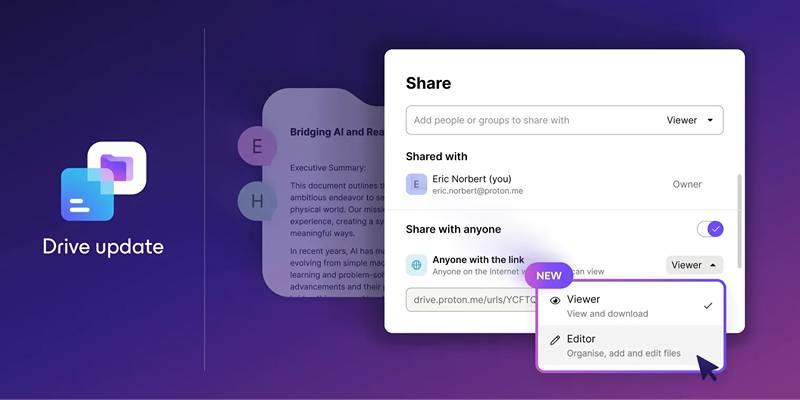
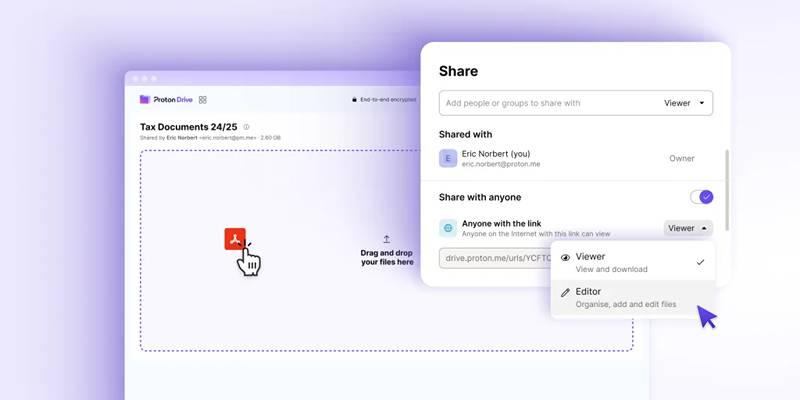
The core enhancement lies in Proton’s new link-based sharing system, which enables file and folder sharing with non-Proton users. Previously, both the sender and the recipient had to be part of the Proton ecosystem to exchange files or collaborate on documents. Now, Proton Drive users can generate public links that allow anyone to view or interact with shared content—regardless of whether they have a Proton account.
People who use Proton for work but need to work with clients, partners, or coworkers who use different platforms will no longer have to deal with a big problem. With the click of a button, Proton users can share files with set access controls. It lets them safely work with people from other companies.
Proton ensures that users maintain full control over these shared links. Each link can be configured with one of two access roles—Viewer or Editor—determining whether the recipient can view the content or make changes, including uploading new files into shared folders.
Editor Access: Enabling Two-Way Collaboration
The addition of Editor access for public links is especially transformative. It enables a level of interaction that Proton Drive had not previously offered to external users. For example, when a folder is shared with Editor permissions, the recipient can upload documents directly into that folder. It is particularly useful in professional environments where documents, assets, or drafts must be exchanged across teams or between clients and service providers.
Despite being open to non-Proton users, all interactions remain secure. Shared links are generated within Proton’s encrypted infrastructure, and users can revoke or modify permissions at any time. It ensures that even as the system becomes more collaborative, it does not sacrifice user control or data confidentiality.
Proton Docs Join the Collaboration Upgrade
Proton Docs, the company’s encrypted document editor, has also received a corresponding upgrade. Documents created in Proton Docs can now be shared publicly via the link, enabling real-time editing and commenting by external collaborators.
This functionality aligns Proton Docs with popular document collaboration tools but with a fundamental difference: the entire process takes place within Proton’s zero-access encryption framework. It means Proton cannot read the contents of documents, even when they are shared externally.
In addition to real-time collaboration, Proton Docs now feature email notifications to alert users when someone comments on or suggests edits to a shared document. These notifications allow for responsive feedback cycles and help maintain the momentum of collaboration without requiring constant manual checks.
Mobile Collaboration with Full Feature Support
Recognizing that modern collaboration isn’t limited to the desktop, Proton has ensured that these new features are also available on its mobile apps for iOS and Android. Mobile users can now access shared files, respond to document comments, and make edits on the go—all from within Proton’s mobile Drive and Docs interfaces.
The inclusion of mobile support ensures that users can remain productive while traveling or working remotely. It reflects a broader shift in workplace norms, where flexible, device-agnostic productivity is no longer optional but essential.
Proton’s mobile experience has been optimized to support document previews, link-based sharing, and comment tracking without compromising on usability or security. These improvements bring its mobile suite more in line with productivity leaders, further establishing Proton as a legitimate alternative to less secure cloud platforms.
Maintaining Proton’s Privacy Standards
While Proton’s move toward open sharing might raise concerns about security, the company has taken a privacy-first approach to implementation. Proton’s end-to-end encryption standards still govern public sharing links. Unlike traditional cloud services that may scan, index, or analyze shared content, Proton retains its policy of zero access.
Files shared via links remain encrypted on Proton’s servers. Only those with the correct link and assigned permissions can decrypt and access the content. Additionally, link sharing can be disabled or altered at any time, allowing users to maintain control over access and usage.
No registration or email collection is required from recipients, meaning that even those outside the Proton network can collaborate without surrendering personal data—something rarely offered by mainstream platforms.
Accessibility and Availability

One of the most notable aspects of this update is that it is available to all Proton Drive users, including those on free accounts. This inclusive approach broadens the potential impact of the change and aligns with Proton’s mission to make privacy accessible to everyone, not just those who can afford premium subscriptions.
Offering external collaboration features at no additional cost makes Proton Drive and Docs more competitive in the personal and small-business productivity space. Users are no longer forced to choose between privacy and functionality—they can now have both.
Conclusion
With the launch of link-based collaboration in Proton Drive and Docs, Proton has taken a definitive step toward becoming a mainstream productivity solution. Users no longer need to limit collaboration to those within the Proton ecosystem. Instead, they can engage clients, colleagues, and partners across any platform—securely and seamlessly.
These enhancements make Proton’s services more versatile, practical, and attractive to both privacy advocates and productivity seekers alike. For those who’ve waited for a secure collaboration tool that doesn’t compromise on values, Proton has delivered an answer—thoughtfully, efficiently, and at scale.